Experienced techies are in high demand...
A mix of financial software consultants...
Computer engineers, experienced and graduates...
Understanding the full range of a business...
A new venture demands understanding a problem...
Understanding customers...
Switchers from product management, sales and marketing...
Particularly interested in generic skills, to learn quickly, to fit in, attitudinal ...
Seeking people with a mixture of technology and business skills...
Technical skills, but also accountants and business...
Seeking people across the spectrum, sales operations, customer operations, supply chain management...
From commercial experience to engineering experience...
Data analysts, project managers, project roles...
'Smart people', who understand new ways of using technology...
Creative, innovative, flexible problem solvers...
Sunday, 30 August 2015
What Tech employers really want?
From Silicon Republic (link)

Saturday, 29 August 2015
Talk to customers
Sunil Kumar offers a nice quote on the risk taken with a design-in-the-dark strategy (interview in Silicon Republic)
"I’ve said this to loads of people: moving from an IT perspective to a business perspective can be achieved but definitely the easiest way to do it is talk to customers, because they say things you don’t expect, and it gets you thinking.
I’ve taken a technical decision in the past where I’ve thought something was a really great feature – coded it, and went out to try and sell it, and potential customers were not interested. All of a sudden you’ve made this technical decision based on nothing but your ability to code it and you get a zero return on investment."
Thursday, 27 August 2015
The best designs disappear from mind
There is a view that good design should disappear from view, should not direct itself to mind, should be invisible. Good designs, designed things, tools and things that get used, should not impose themselves on their users. Or rather, our interaction with the designed object should be so natural and seamless that we do not need be present-aware that we are using the tool in attaining our goal. Use-in-work (and enjoyment-in-use?) with a well designed tool, product or service should, in a sense, occur beneath direct perception, acting as a natural extension of our physical and sensory engagement as we are engrossed in the activity or goal we are directed towards.
The article in Wired (link) reminded me of these design principles, and it introduced me to Dieter Rams' less but better (weniger, aber besser) and his other "ten principles of good design". It set me thinking about how these principles apply to software design...
The article in Wired (link) reminded me of these design principles, and it introduced me to Dieter Rams' less but better (weniger, aber besser) and his other "ten principles of good design". It set me thinking about how these principles apply to software design...
Another topology of research methods for design
Another depiction of the spectrum of possible research methods, a way of classifying them, a way of understanding their application and use. (link to the Interaction Design Foundation article)
 |
| From the article on UX Research Communication – Report Writing |
Saturday, 22 August 2015
Cinematic views of software, high-tech, and philosophy
Expanding on a list of key documentary and cinematic views of working in software and high-tech industry (informed by Codemate's post).
Being in the World (2010)
A surprisingly beautiful presentation of the philosophy of human experience, how we apprehend ourselves, others, space, time, action, activity. The film's director and speakers attempt to convey a foundational understanding of our place in the world, our embodied existence. What is true about my being a person, how are we beings, how do I manifest, what it is to be or to exist in the world, how do we encounter and act in the world? Directed by Tao Ruspoli, interviews with the philosophers Hubert Dreyfus, Sean Kelly and many others.
Wittgenstein: A Wonderful Life (1989)
Being in the World (2010)
A surprisingly beautiful presentation of the philosophy of human experience, how we apprehend ourselves, others, space, time, action, activity. The film's director and speakers attempt to convey a foundational understanding of our place in the world, our embodied existence. What is true about my being a person, how are we beings, how do I manifest, what it is to be or to exist in the world, how do we encounter and act in the world? Directed by Tao Ruspoli, interviews with the philosophers Hubert Dreyfus, Sean Kelly and many others.
Wittgenstein: A Wonderful Life (1989)
From VHS. A BBC 'Horizon' film about the remarkable life of the Austrian philosopher Ludwig Wittgenstein. Directed by Christopher Sykes.
Code: Debugging the Gender Gap
Documentary dealing with gender imbalance in the tech industry
Triumph of Nerds 1-3
by Robert X Cringely
Something Ventured
by Dan Geller
id software history
by machinima.com
Pirates of Silicon Valley
by Noah Wyle
Revolution OS
by Linus Torvalds
Coding Culture
by Gautam Sonti
Aardvark'd: 12 weeks with Geeks
by Lerone D. Wilson
Indie Game: The Movie
by Merge Games
After watching you will be inspired to play or re-play some of the most influential indie and commercial computer games of the last decades referenced in the film: ICO, Limbo, Zelda (all platforms, all versions), World of Goo, Portal, Slender, etc.
The Social Network
by David Fincher
Designing Interactions
by Bill Moogridge
The Pixar Story
by Leslie Iwerks
Connecting: a documentary about UX and ID
by Basset and Partners
The Design Makers - Inside Ford Design
by the Ford Design Center
Helvetica
by Gary Hustwit
Objectified
by Gary Hustwit
Crocodile in the Yangtze (2012)
by Porter Erisman
Code: Debugging the Gender Gap
Documentary dealing with gender imbalance in the tech industry
Triumph of Nerds 1-3
by Robert X Cringely
Something Ventured
by Dan Geller
id software history
by machinima.com
Pirates of Silicon Valley
by Noah Wyle
Revolution OS
by Linus Torvalds
Coding Culture
by Gautam Sonti
Aardvark'd: 12 weeks with Geeks
by Lerone D. Wilson
Indie Game: The Movie
by Merge Games
After watching you will be inspired to play or re-play some of the most influential indie and commercial computer games of the last decades referenced in the film: ICO, Limbo, Zelda (all platforms, all versions), World of Goo, Portal, Slender, etc.
The Social Network
by David Fincher
Designing Interactions
by Bill Moogridge
The Pixar Story
by Leslie Iwerks
Connecting: a documentary about UX and ID
by Basset and Partners
The Design Makers - Inside Ford Design
by the Ford Design Center
Helvetica
by Gary Hustwit
Objectified
by Gary Hustwit
Crocodile in the Yangtze (2012)
by Porter Erisman
Thursday, 20 August 2015
Fallacies of design and development projects
We have varying experiences, over time, of technology, systems, and products. There are commonly held beliefs and folklore about technologies, how they are developed, what they can and cannot do. When we use systems, make system, we build up pet theories and assumptions about the objects and others involved.
Software is magic
Software is magic
- The possibilities for software are unlimited (you can make anything you desire if you have the ambition)
- Your team members are Wizards; although they will be very smart, well educated, experienced, amazing wonderful people.
- Good design appears 'out of the blue'; it doesn't, it is the product of many cycles of both perspiration and inspiration. This fallacy sometimes pops up as a counter-argument to the principle of customer driven design, often by appealing to a design icon like the iPhone. The counter-counter-argument should highlight that the iPhone 'appeared' after more than 10 years of product revision and market evolution.
- You can have anything and everything you want;
- Designs are infinitely malleable; this is one of the assumptions behind the 'all you can eat' fallacy.
- Redesigns are cheap; this is one of the assumptions behind the 'all you can eat' fallacy.
- All requirements are equally important; this is a corollary to the 'all you can eat' fallacy.
- Requirements are the same as user goals; they aren't!
- Users know what they want; they don't, but they do know what they like when they see it and use it for a while.
- Designers know what users want; they don't, not always anyway, and of course designers may be users too, just be careful that the designer isn't always designing what he or she wants instead of what your market needs/wants etc; he/she is not a Wizard, just an incredibly diligent, sensitive, smart, well educated, experienced, amazing wonderful person.
- The project manager knows what everyone should be doing, is doing, has done (what, when and where); he/she is not a Wizard, just an incredibly diligent, sensitive, smart, well educated, experienced, amazing wonderful person.
People are stupid
- Customers/users/developers/managers etc "are stupid"; labelling groups is a symptom of other underlying problems.
- Someone else is at fault; results in finger pointing, when really the disagreement between expectations and actuality is more likely the result of different starting point assumptions (from Alex Cowan)
- I must be stupid because I can't use the software; any time you experience an 'I don't get it' moment, rephrase the feeling to 'the designer doesn't get me' (from Alex Cowan).
- Software is free; Nothing is free free, free Apps have costs, even Free/Open Source Software costs.
- Your time is free; This is the working assumption behind 'death march' projects. Also the working assumption behind designs that impose unnecessary cognitive loads on end users.
One size fits all
- The needs of the many outweigh the needs of the few.
- The need of the one is the same as the need of the many.
Lord of the Rings Management
- Give me the one best solution; the solution could be product, service, system, method, management framework; the fallacy is that everything can be made simple when instead some things are intrinsically difficult or complex.
I know you know
- But it's in the documentation!; the perfect communication fallacy, 'the documentation' might be nearly anything, from a Market Requirements Document to a bug report.
- But I told you yesterday!; the perfect communication fallacy. Communication is rarely perfect i.e. what you think you said, what you actually said, what was heard, what was understood.
- RTFM; Assuming I took the time to read the ** manual. Assuming the information needed is in the manual. Assuming it is well written, comprehendible etc.
Failure is not an option
- Well actually, it is! In fact it is a very real possibility. That's why we have pivots and product readiness, project reviews
- Don't get sucked into following this piece of classic leadership claptrap.
Questioning: Collective Creativity
Help Seeking: Help Giving: Reflective Reframing: Reinforcing:
How to introduce such behaviours?
What to do when other behaviours detract from what you want to achieve?
When and when do problem recognition, problem solving, and design insight take place?
Who takes responsibility for work in such an environment?
Must organisations leave it to 'spontanaeity' if they want creative solutions?
Are prior social relations necessary before another would participate on someone else's problem solving?
What kinds of organisational features would allow HS:HG:RR:R occur?
What kinds of organisational features would restrict the occurrence of HS:HG:RR:R?
Can the knowledge and learning of another be fully captured in a report or presentation?
Is intrinsic motivation sufficient to sustain HS:HG:RR:R?
What reward structures support or undermine HS:HG:RR:R?
Minority dissent, high participation, performance pressure are all associated with increased innovation.
Social loafing, social anxiety, blocking, downward comparison are associated with decreased innovation.
Brainstorms and transitory teams are two organisational responses for supporting the behaviours.
Organisation's values, perceived and explicitly stated imply reinforcing features.
Knowledge management systems, documents and databases have a supporting role if used or useable.
How to introduce such behaviours?
What to do when other behaviours detract from what you want to achieve?
When and when do problem recognition, problem solving, and design insight take place?
Who takes responsibility for work in such an environment?
Must organisations leave it to 'spontanaeity' if they want creative solutions?
Are prior social relations necessary before another would participate on someone else's problem solving?
What kinds of organisational features would allow HS:HG:RR:R occur?
What kinds of organisational features would restrict the occurrence of HS:HG:RR:R?
Can the knowledge and learning of another be fully captured in a report or presentation?
Is intrinsic motivation sufficient to sustain HS:HG:RR:R?
What reward structures support or undermine HS:HG:RR:R?
Minority dissent, high participation, performance pressure are all associated with increased innovation.
Social loafing, social anxiety, blocking, downward comparison are associated with decreased innovation.
Brainstorms and transitory teams are two organisational responses for supporting the behaviours.
Organisation's values, perceived and explicitly stated imply reinforcing features.
Knowledge management systems, documents and databases have a supporting role if used or useable.
Can Agile teams work to contract?
Contracts are often pointed to as one of the structures that appear to act as obstacles to the adoption of Agile process and practice adoption in teams. Yet at the same time 'contractual thinking' seems to be behind the use of User Stories, Product Backlogs, Unit Tests and Test Driven Development, all of which are key practices on SCRUM, XP and Agile teams.
Mike Cohn of Mountain Goat Software writes about these contractual aspects of Agile teams but also, how to write contracts that work well in these environments (link)
Mike Cohn of Mountain Goat Software writes about these contractual aspects of Agile teams but also, how to write contracts that work well in these environments (link)
Definition for Digital Product Management
Product Owner - Product Development
Outward facing responsibilities
You take responsibility for product line business development and reporting to the management team.
You help steer the development of the product through client feedback.
You provide Sales with the tools needed to sell the product (user guides, promotional materials etc.).
You prepare the demo kit for/with the sales team
Write and commission advertisements and article copy
You are involved in managing consumer communications via social media networks like Twitter / Facebook
You monitor and manage customer feedback / issues.
You will care about User Experience and User Interface design for consumer touch points – app, website etc, helping to develop, manage and maintain the company’s websites, market research, reporting revenue / costs, account management, product direction, PR, events, and marketing.
You will manage definition of the MVP (minimum viable product), identify pivots, engage the whole product development team, engage customers / users / players.
Inward facing responsibilities
You are involved in and manage product requirements elicitation and management, identifying feature goals (in-order-to's), and values of.
You manage the product backlog process.
You are involved in enhancing all aspects of the working environment.
Outward facing responsibilities
You take responsibility for product line business development and reporting to the management team.
You help steer the development of the product through client feedback.
You provide Sales with the tools needed to sell the product (user guides, promotional materials etc.).
You prepare the demo kit for/with the sales team
Write and commission advertisements and article copy
You are involved in managing consumer communications via social media networks like Twitter / Facebook
You monitor and manage customer feedback / issues.
You will care about User Experience and User Interface design for consumer touch points – app, website etc, helping to develop, manage and maintain the company’s websites, market research, reporting revenue / costs, account management, product direction, PR, events, and marketing.
You will manage definition of the MVP (minimum viable product), identify pivots, engage the whole product development team, engage customers / users / players.
Inward facing responsibilities
You are involved in and manage product requirements elicitation and management, identifying feature goals (in-order-to's), and values of.
You manage the product backlog process.
You are involved in enhancing all aspects of the working environment.
Thursday, 6 August 2015
Areas of concern for digital product management
I believe that the following areas are those that should be the concern of, and areas of action for, digital product management.
Spotting where problems are in software, in code, in tests, in systems, in processes and procedures.
Collaborating with others to propose or identify or create solutions.
Needing to have a mental picture and idea of the whole product environment in order to understand technical possibilities and limitations.
Being able to follow if not run the full release cycle, usually with other's involvement and help, to produce a workable copy of the software and operate it.
There are whole specialisms and domains of knowledge that you need to be aware of if not expert in, for example:
Spotting where problems are in software, in code, in tests, in systems, in processes and procedures.
Collaborating with others to propose or identify or create solutions.
Needing to have a mental picture and idea of the whole product environment in order to understand technical possibilities and limitations.
Being able to follow if not run the full release cycle, usually with other's involvement and help, to produce a workable copy of the software and operate it.
There are whole specialisms and domains of knowledge that you need to be aware of if not expert in, for example:
- Creating digital media including but not limited to; graphics, video, audio, fonts, text, formatted text, electronic books, styles, models, and many more.
- Programming in various computer languages. Knowing the distinction between interpretable and executable software, between scripts, byte code and machine code, the necessary extras (libraries) that allow the software to run.
- Wireframes, prototyping, paper prototypes, incremental and iterative development.
- Testing, as a of broad specialism that also includes programming.
- Source code control systems and document versions using github or subversion or cvs or other systems.
- Packaging, installation, and package management.
- Issues of legacy systems; in one way anything becomes a legacy system the moment it gets released. This area can be approached in different ways, data versus execution or running environments.
- Localisation (aka l10n) and Internationalisation (i18n) are really important areas, unless of course you want to ignore international customers/users. Localisation is highly specialised but increasingly easier to address through the enhanced support offered by software development environments. So no more need to 'hard code' translations or language rules, these are now provided for by standard development libraries. So to, it is now a commonplace for computer fonts and character sets to support extended and unicode character sets allowing the display and use of text in any language, type, and linguistic framework. For example, left to right, right to left, top bottom, sentence patterns used in european, middle east and asian languages.
- Online help systems including pop-up and context sensitive help, often the first and only documentation provided with software.
- The components of and services provided by operating systems.
- Managing vendors and other third party contributions.
- Data visualisation.
- Help desk and frontline support systems.
- Sales and customer relationship management.
- Quality management systems; not usually an area that software development prides itself on but essential and necessary nonetheless.
- General technological infrastructure like internet protocol, ip addresses, networks, network protocols, subnets, routers, switches, wired and wireless, firewalls, packets, packet sniffing, shared drives, cloud storage, routers, domain control, ftp, port management, virtual machines, password managers.
- Web hosting, website builders, domain registration and management, email server setup and settings, canonical name record (CNAME) and the Domain Name System (DNS) and IP addresses.
- Content management systems, workflow and web services (things like Wikis, Wordpress, Joomla, Drupal and many others).
- Databases, ranging over flat file, to relational, sql, object databases and post-relational databases.
- Web services, evolving capabilities of HTML, REST, and other important API services.
- LAMP architecture (i.e. Linux, Apache, MySQL and PHP)
- MEAN architecture (i.e. MongoDB, Express, AngularJS, Node.js)
Thursday, 30 July 2015
No to No UI, more responses
The idea that UI is the problem has exercised minds for a long time. It is an assumed aspect of Don Norman's Design of Everyday Things. But presenting it in terms of a dichotomy of more or less really does miss the point. Timo Arnall responds to the urge to 'invisible' design; effectively to strive to make the design disappear from the user's awareness. (link)
Think instead perhaps of presenting more information for use rather than attempting to hide everything away. People are going to come up with their own theories anyway, all you achieve by hiding stuff is making people ignorant. Not everyone wants or needs the world to work like a magic trick.
Think instead perhaps of presenting more information for use rather than attempting to hide everything away. People are going to come up with their own theories anyway, all you achieve by hiding stuff is making people ignorant. Not everyone wants or needs the world to work like a magic trick.
Wednesday, 29 July 2015
What does a product manager do? What is value?
An hour of reflection by Jez Humble
Value is what gives your life meaning... The trouble with estimates is that they're wrong. Especially as predictions they're terrible as they set up the wrong expectations.
Estimation is not just valueless, it actually has negative value because people have the wrong expectations. People expect your estimates to be right! And the one thing I can tell you about your estimates is that they will be wrong! And that sets up bad expectations.
What estimation does do, is estimation helps create a shared vision of what you're going to build!
Thursday, 2 July 2015
The Critical 10 in any 'pitch'
From the Official SlideShare blog How to Be ‘Pitch Perfect': 5 Essential Elements for Your Pitch Deck
<quote>
Include the Critical 10
A solid pitch deck always touches on 10 items:
1. The Company/The Vision
2. The Problem
3. The Solution
4. The Opportunity
5. Product/Service
6. Team
7. Revenue Model
8. Competition
9. Financials
10. The Ask
</quote>
Friday, 12 June 2015
After discussing Soul of a New Machine: Wordle-like keywords
General aspects of high-tech production
There is no 'law of physics' or mathematics that governs the higher level design of systems, of software, of devices. Agree a definition of what high-tech production is in general.
Designing and building something to solve a problem.
Is software development a kind of engineering?
Designing and building something to solve a problem.
Is software development a kind of engineering?
No Yes Artistic Expressive
What words describe high-tech design work, its outputs, its ethos?
Craft Purpose constraints requirements
design plan optimisation
craft first-time (all the time) creative
What roles are essential?
architect designer user
Engineering culture and work practices
What impressions do you have of the sense of a high-tech workplace?
Respect Dinosaur value Pigeonholed Geeks
What reflects the values of design work?
Autonomy Responsibility Problem-solving Empowering
challenging
management hierarchy technical strength
List engineering management practices you identified at Data General...Using that list, contrast it with process and practice specifications of different life cycles, management frameworks and methods. For example, what aspects of the culture in Data General's Eagle could be depicted as good management practice? If you had to give them a label would any of the practices at Data General fit into the practices of Extreme Programming?
Innovation, management and leadership
Who drove the Eagle? Who designed it? What did they need to do to express it?
Ed de Castro? Steve Wallach Rosemarie Tom?
What strategies did they bring into play?
Machiavellian political power new
creative context conditions LIMITS timing
WORK do/act process
WORK do/act process
What roles were essential?
Faclilitator buffer Leader
designer followers lieutenants
Teams and interaction.
What happens in teams? What works well, what doesn't?
Stability 3mths 3 years deadlines
realism Ownership specialisation pushing
realism Ownership specialisation pushing
creative games limits Socials
social club reviews dog racing
social club reviews dog racing
Utlimate Test Frisbee
Trust
Additional resources: (thanks to Alex)
Picture of the team, Kidder & Tom also a map of the Adventure game and some block diagrams
Links to advertisements and printed company material, pictures of the machine & boards and loads of technical documentation. Also links to publications & patents (as mentioned in the book) on the topic.
Seminar at the Bank of Ireland Innovation Lounge
Special off-site lecture on Thursday (June 4) held at the Bank of Ireland Innovation Lounge - Bank of Ireland, 1 Grand Canal Square, Docklands, Dublin 2.


Construction Exercise 2014-15
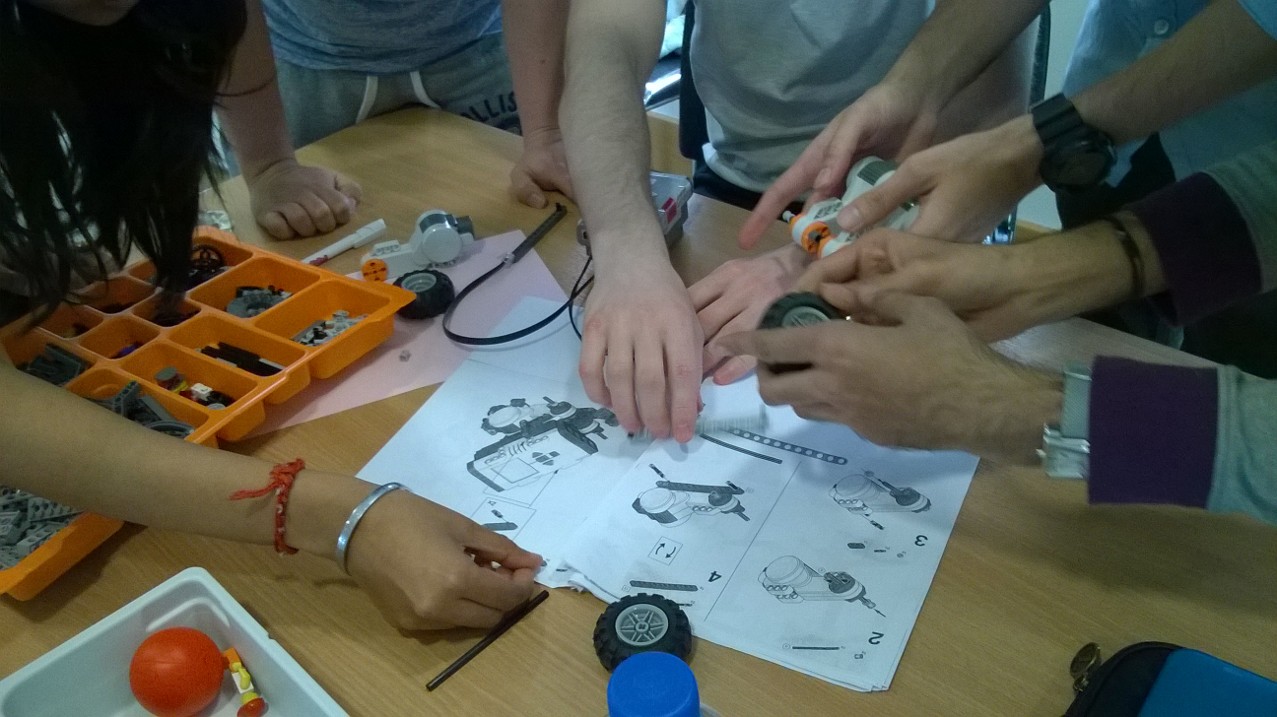
Some photos from the construction exercise 2014-15 held on 5/June/2015 in Q201, Lochlann Quinn Building, Belfield.



Thursday, 11 June 2015
Exercise: Requirements Design Trade-off
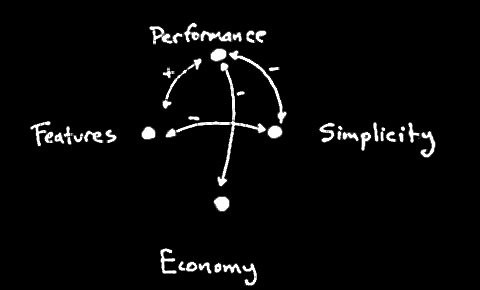
This exercise has been adapted from Alexander’s ‘Notes on the Synthesis of Form’ (Alexander, 1964); the simple design problem from section 1 ‘the need for rationality.’ Alexander’s classic design tetrad characterises trade-offs between the major product requirements: simplicity, performance, features, economy.
Objective
Organise, model and explore the interrelationship between different requirements.
Requirements/Design Preparation
1. In groups of 2 or 3 categorise the following non-functional requirements for an imaginary high tech product.
Statement of non-functional requirements
Discussion:
Reference:
Alexander, C. (1964) Notes on the Synthesis of Form, Cambridge, Massachusetts, Harvard University Press.
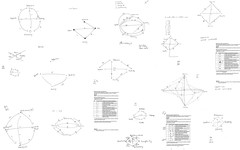
A Collage of Outputs from the Requirements Exercise
Objective
Organise, model and explore the interrelationship between different requirements.
Requirements/Design Preparation
1. In groups of 2 or 3 categorise the following non-functional requirements for an imaginary high tech product.
Statement of non-functional requirements
- A simpler product (system, service, device) will be easier to manufacture and operate.
- A simple product with fewer features is going to be less costly to maintain.
- A simple product is easier to construct as it has fewer features.
- Greater system performance or power is achieved by including more (advanced) features.
- A highly optimised product is difficult to improve, change, fix or maintain without degrading its performance.
- A simpler product does not deliver as many features or options as a more complex product.
- A simple product using fewer specialised parts will not perform to as high a level as one using specialised optimised parts and sub-systems.
- Adding more features makes the product more difficult to maintain.
2. Consider following product requirements categories: Simplicity, Performance, Feature Set, Build/Operate Economy.
3a. Map these non-functional product requirements to the following categories: Simplicity, Performance, Features, Economy (+ or - for complement or conflict).
3a. Map these non-functional product requirements to the following categories: Simplicity, Performance, Features, Economy (+ or - for complement or conflict).
3b. (Online version) Use a Jamboard to draw the trade-off diagram (link). Each group draw numbered arrows with plus or minus indicators (+/-) to complete the diagram, illustrating the relationships between the requirements listed.
Discussion:
- Do requirements influence design decisions?
- Is a unique solution possible satisfying all requirements?
- Do requirements specify design?
- Is it possible to overcome contradictory requirements?
- Would more detail enable us to overcome contradiction?
- Will computer modelling of requirements enable conflicts to be resolved?
- Does the design of the product limit which requirements can be delivered?
- Is there always a trade-off between requirements and design?
Reference:
Alexander, C. (1964) Notes on the Synthesis of Form, Cambridge, Massachusetts, Harvard University Press.
A Collage of Outputs from the Requirements Exercise
Subscribe to:
Posts (Atom)